argonne national laboratory
a deep-research assistant for AI-assisted scientific discovery
00
problem
Argonne National Laboratory launched Argo in late 2023 as a secure, internal generative AI interface — multiple LLMs, document upload, an API for science developers. But a general-purpose chatbot is not a research tool. Scientists need to search across sources they haven't encountered yet, follow connections between findings, and reason through evidence over many steps. Argo had strong models — what it lacked was the orchestration layer to connect retrieval, reasoning, and domain knowledge into a workflow that actually accelerates research rather than generating plausible-sounding summaries.
solution
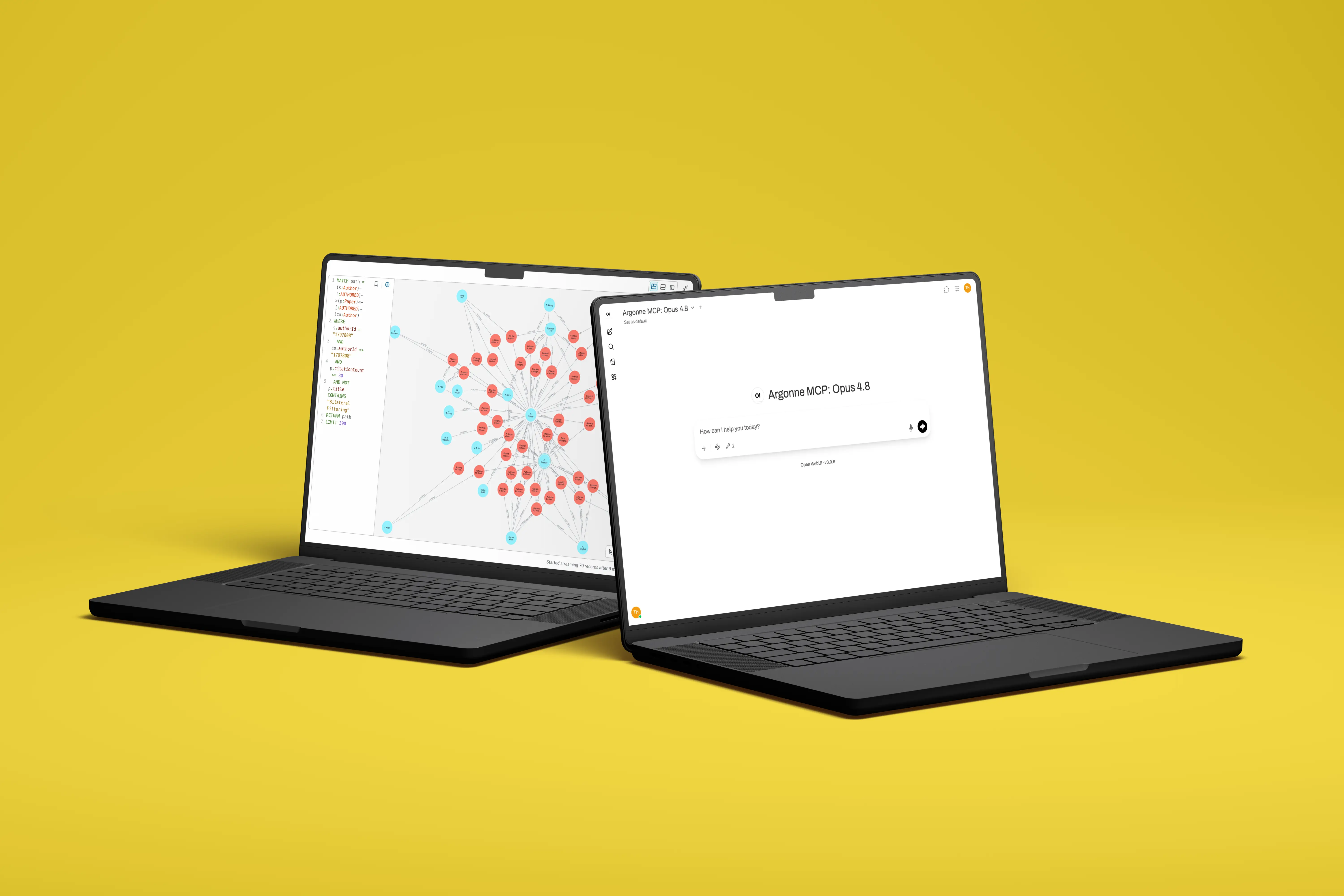
The Argo Research Agent is a tool-augmented research assistant that sits behind a standard chat interface while handling multi-step search, retrieval, and synthesis behind the scenes. A FastMCP server exposes roughly fifteen modular tools — semantic search over a Neo4j knowledge graph of scientific publications, citation chain traversal, author and topic analytics, live Semantic Scholar and arXiv lookups, and general web search — that any MCP-capable client can discover at runtime. Scientists interact through Open WebUI, where the model selects and chains tools based on the question.
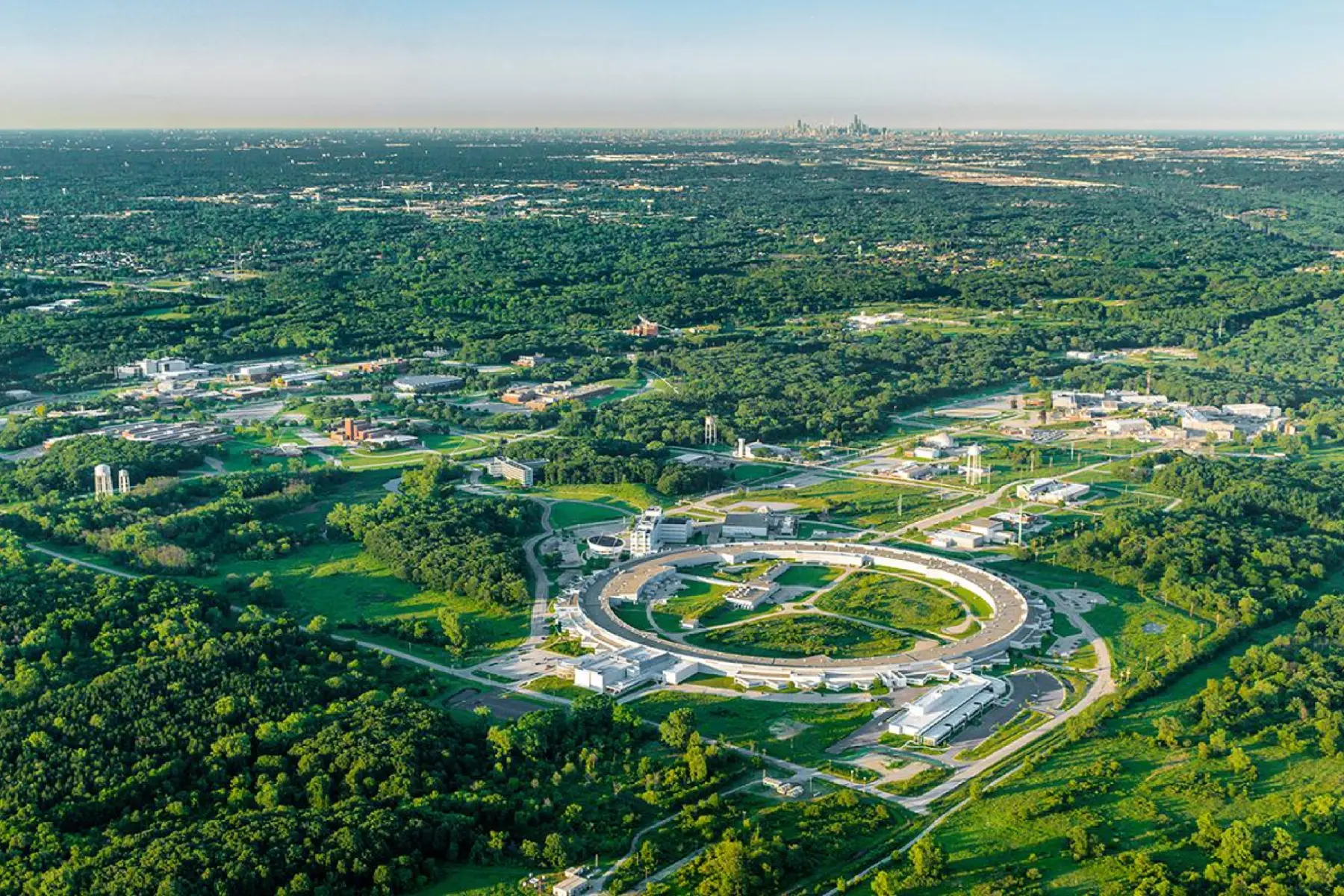
Argonne National Laboratory is a U.S. Department of Energy national laboratory working across clean energy, materials science, biology, and advanced computing. Their mission is grounded in accelerating scientific discovery — and the scale of modern research means scientists increasingly need tools that can search, connect, and reason across evidence faster than any individual can.
Through the University of Chicago Data Science Clinic, I mentored seven students across two quarters to design and build the system. The first quarter focused on the agent core — teaching a model to decompose research questions into sub-queries, gather evidence from a local publication corpus, and synthesize structured reports. The second quarter shifted to making the tool layer modular and production-ready: a Model Context Protocol architecture where each capability is independently deployable, schema-described, and discoverable by any MCP-capable client.
Under the hood, the system is built around a Neo4j knowledge graph populated by a reproducible pipeline — seed papers from Semantic Scholar, citation neighborhoods expanded to configurable depth, SPECTER embeddings for vector search, and author-level vectors derived from their publication histories. A FastMCP server wraps roughly fifteen tools over that graph: semantic paper search, citation chain traversal, author similarity, trend analysis, and live external lookups. Scientists interact through Open WebUI, where the model selects and chains tools based on the question without any custom agent code.
The deliverable needed to be concrete enough for real scientists to evaluate and modular enough for Argonne's engineers to integrate into the production Argo platform. The full stack runs in Docker Compose with a single Makefile — every stage of the data pipeline, the knowledge graph, and the tool server can be rebuilt or extended independently.
Client: Argonne National Laboratory.
.say hello
always glad to talk research software, data tooling, or ai. drop me a line and let's find something to build together.